
For many patients, the first time they drive after hip or knee replacement surgery represents a step toward regaining their independence. The question of when it is permissible—and, above all, safe—to drive again is therefore one of the most common questions asked after joint replacement surgery.

Priv.-Doz. Dr. med. habil. Johannes Schauwecker ist Facharzt für Orthopädie und Unfallchirurgie sowie Ärztlicher Leiter und Geschäftsführer des OZMO – Orthopädie Zentrum München Ost. Seine Schwerpunkte liegen in der Behandlung von Erkrankungen des Hüft- und Kniegelenks. Dabei stehen gelenkerhaltende Verfahren sowie moderne, individuell abgestimmte Methoden des Gelenkersatzes im Mittelpunkt.

When will I be able to drive again after the surgery?
There is no one-size-fits-all answer, as the healing process varies from person to person. In most cases, however, it is possible to drive again after about four weeks—provided that mobility, strength, and reaction time have sufficiently recovered.
Responsiveness is more important than the time that has passed
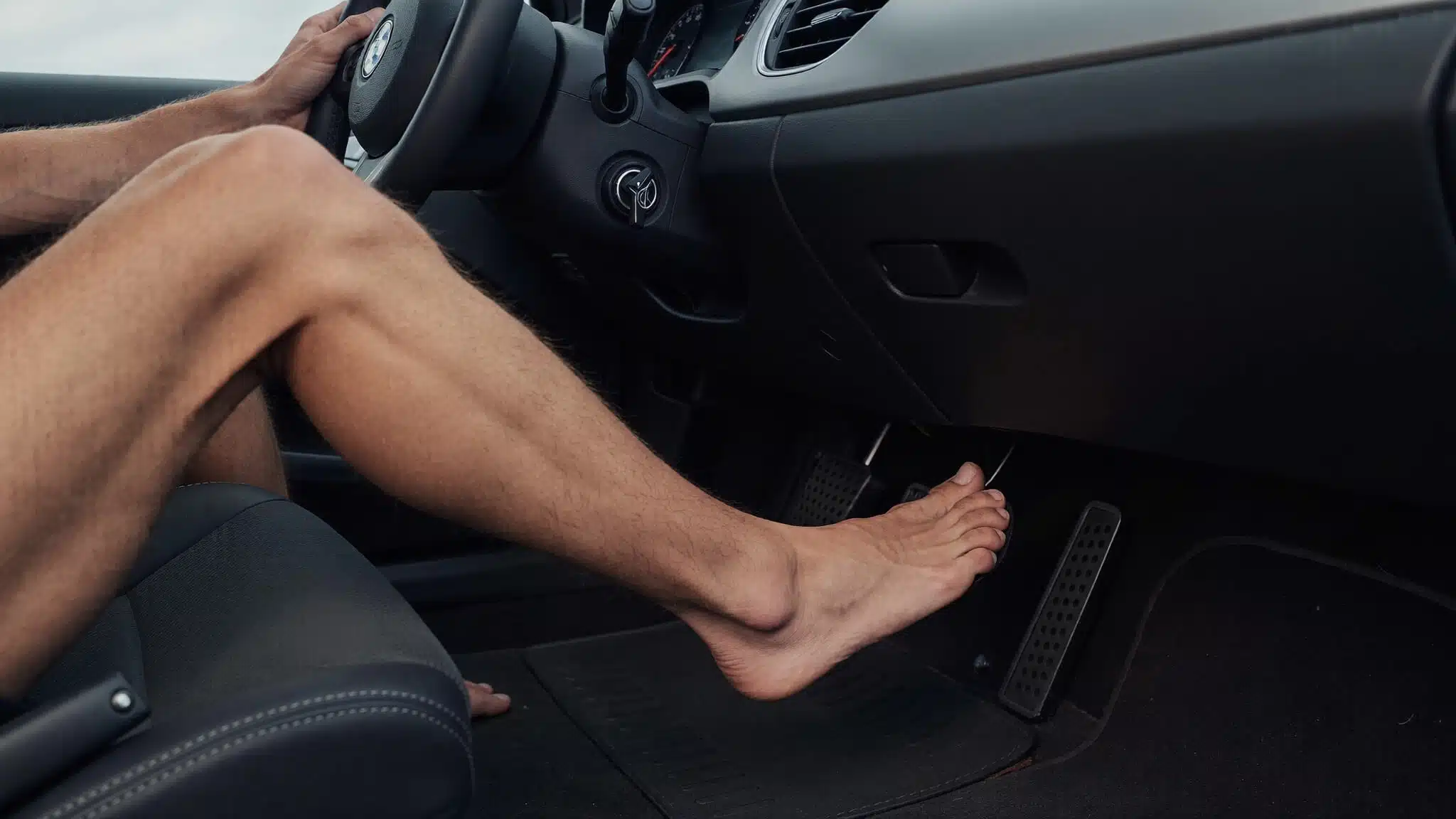
What matters here is not just the amount of time that has passed since the surgery, but above all the ability to react quickly and in a controlled manner in a dangerous situation. Anyone who drives must be able at all times to move their foot from the gas pedal to the brake without delay and to apply the brakes fully with sufficient force. Especially after knee or hip surgery, this ability to react may still be limited during the first few weeks.
Right or Left Leg: It Makes a Difference
Especially after surgery on the right leg—that is, the side normally used to operate the gas and brake pedals—you should not resume driving until your orthopedic surgeon gives you the green light. After surgery on the left leg, driving an automatic vehicle is often possible sooner; however, the individual situation should still be evaluated by a doctor.
Pain relievers can impair your ability to drive
Furthermore, the effects of pain relievers should not be underestimated. Medications that can cause drowsiness, difficulty concentrating, or slowed reactions make it unsafe to drive. Therefore, anyone taking strong pain relievers should never drive.
Test the first ride carefully
Before your first long drive, it’s a good idea to practice driving in a quiet environment first—for example, in an empty parking lot or in a residential area with little traffic. This allows you to determine, without any time pressure, whether getting in and out of the vehicle is easy and whether you can safely perform braking and evasive maneuvers.
Avoid long car rides during the first few weeks
Even if the healing process is going well, you should avoid long car trips during the first few weeks. Sitting for long periods can cause swelling and increase the risk of venous thrombosis. If you must drive long distances, it’s a good idea to take regular breaks to get up and move around.


Part of Ortivity Network