
The question “Sports with a knee replacement – what is possible?” concerns many patients before and after joint replacement. The good news: an artificial knee joint is by no means the end of an active life. Rather, it gives you the chance of a new, pain-free chapter in which exercise and sport can once again play a central role.
As an orthopaedic center in the east of Munich, we advise you before and after joint replacement. Our aim is to show you that a safe return to sporting activities is possible in many cases and that regular exercise is expressly encouraged. Your individual capacity for sport is at the heart of our assessment. Every patient brings different prerequisites – from physical condition and previous sporting experience to personal goals.
In this comprehensive guide you will learn everything important about the possibilities of sport after a knee replacement. We explain which sports are suitable, how the healing process progresses and which precautions you should take. The information in this guide consists of general guideline values and does not replace individual clearance by your surgeon. Differentiated advice and realistic goal setting are the keys to your success.
At a glance
The key facts in brief
- An artificial knee joint is not the end of an active life.
- Joint-friendly sports such as cycling, swimming, walking and golf are well suited.
- Light sports are usually possible from around three months, more demanding ones only later and after medical clearance.
- High-impact sports such as football, squash or martial arts should be avoided.
- Strong muscles and regular check-ups protect your prosthesis.
Table of contents:
- Knee replacement basics and capacity for sport
- Rehabilitation and healing – the systematic way back
- Low-impact vs. high-impact sports – the scientific classification
- Recommended sports for people with a knee replacement
- A closer look: skiing and winter sports
- Tennis and ball sports – individual assessment
- Strength training and fitness – joint-friendly muscle building
- Risks and precautions
- Frequently asked questions (FAQ)
- Conclusion – individual advice as the key to success

Knee replacement basics and capacity for sport
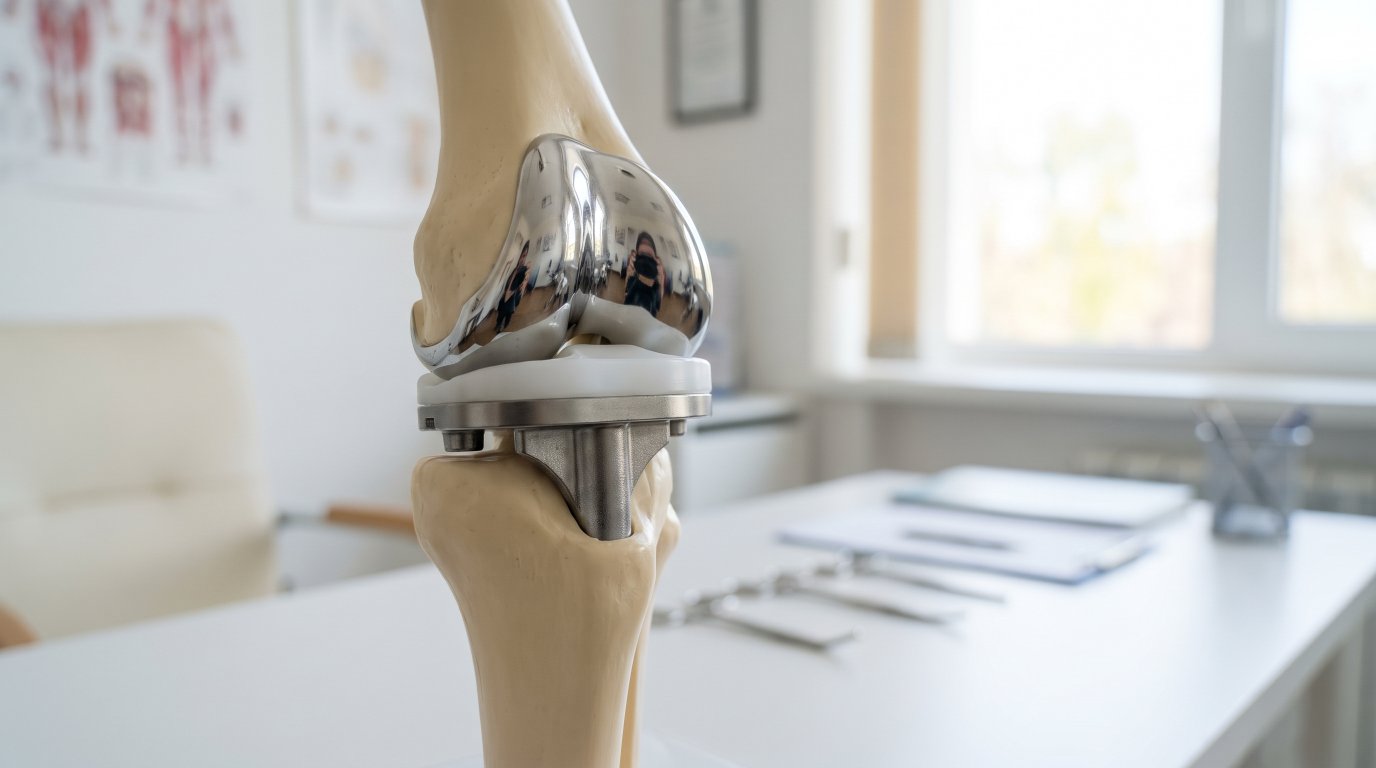
The implantation of a total knee replacement (TKR) is one of the most successful orthopaedic procedures of all. When the cartilage is completely worn away in advanced knee osteoarthritis (gonarthrosis) and the joint is “running on the rim”, considerable pain and restricted movement result. At this point, artificial joint replacement offers a proven and reliable way to restore quality of life.
Modern implants and surgical techniques have improved the conditions for later sporting activity. Precise alignment and a stable fit of the prosthesis create good biomechanical conditions for later loading. With appropriate use, modern knee replacements last many years, often well over 15 years, which makes the question of long-term sporting activity particularly relevant.
Factors determining your individual capacity for sport
- Age and general fitness: Younger patients who are already active often have better prospects of a full return to their usual activities
- Body weight: A higher body weight considerably increases the mechanical load on the implant
- Muscular condition: Well-trained muscles before surgery stabilise the joint and significantly speed up knee rehabilitation
- Previous sporting experience: Anyone who mastered a sport confidently before the operation will find it easier to get back into it and can control their technique better
- Type of prosthesis and surgical technique: The exact fit of the implant and the chosen surgical method are decisive for later function
Your individual capacity for sport cannot be generalised. It requires a careful assessment of all these factors combined with an honest appraisal of your own goals. While a 50-year-old former marathon runner has different options than a 70-year-old occasional athlete, both can become active again with the right approach. What matters is a willingness to set realistic goals that respect both the patient’s wishes and the physical limits of the prosthesis.
Rehabilitation and healing – the systematic way back
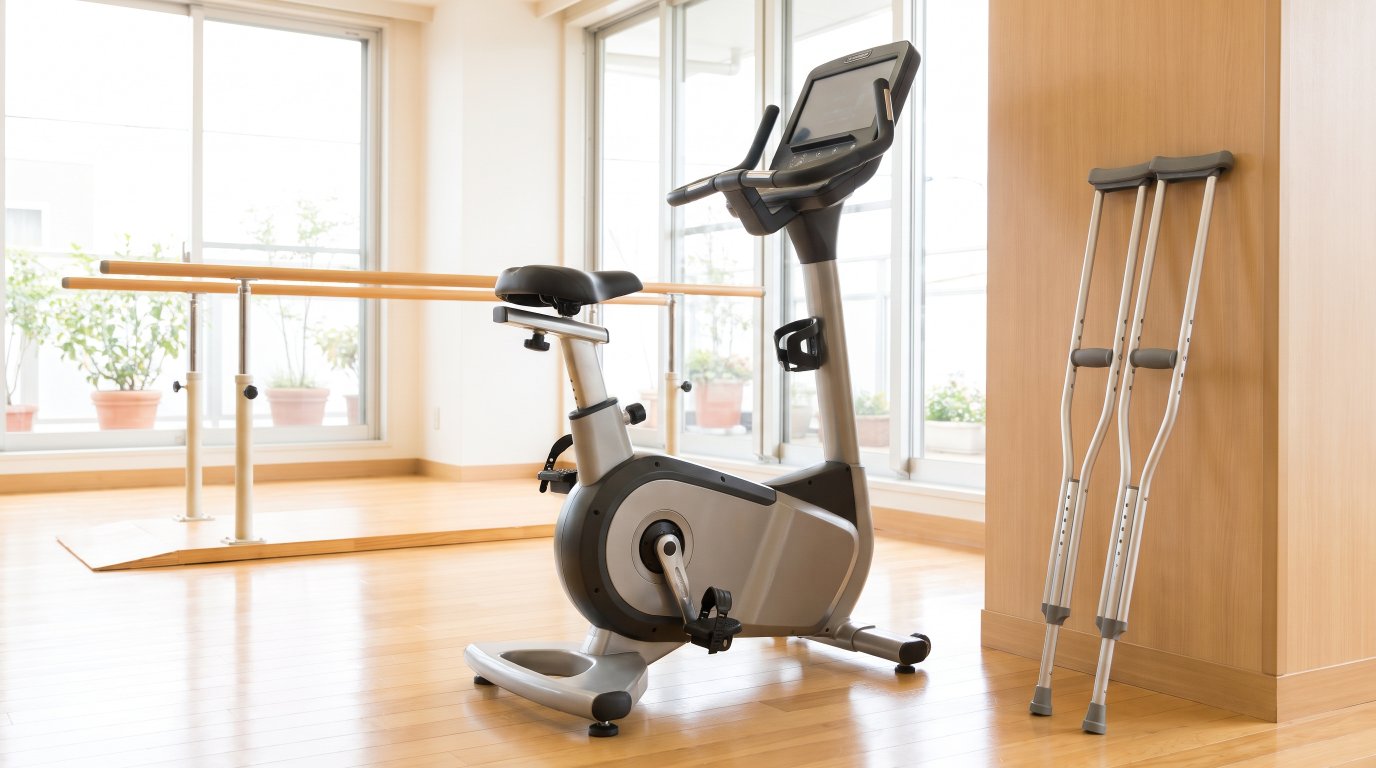
The way back to sporting activities after knee replacement surgery follows a structured rehabilitation programme that can be divided into three main phases. Mobilisation begins as early as the first day after the operation, and most patients are allowed to put full weight on the leg as far as pain allows. This early mobilisation is crucial for successful healing and for avoiding complications.
Phase 1: Early mobilisation (0–6 weeks)
The first phase focuses on wound healing, reducing swelling in the joint and restoring basic mobility. During the first days in hospital, physiotherapy, pain management and continuous exercises on the motorised movement splint take centre stage. Crutches are typically needed for two to six weeks, depending on the individual course of healing. Targeted muscle building already begins in this phase with isometric exercises that do not load the joint but activate the thigh muscles.
Phase 2: Build-up phase (6–12 weeks)
After about six weeks, the load can be increased gradually. Training on the exercise bike can begin, walking distances are systematically extended, and initial strength and coordination exercises are added. The aim is to achieve full extension and flexion of at least 110 degrees. Outpatient or inpatient rehabilitation, which usually follows the hospital stay, consolidates progress and prepares you for the next phase.
Phase 3: Return to sport (from 3 months)
After about three months, the implant has usually healed in well and can bear load. Light, joint-friendly sports can now be started. The intensity is increased slowly and in a controlled way to avoid overloading tissue that is still healing. Swimming, walking and moderate cycling are ideal in this phase.
1From 6 weeksStart
Cycling on the exercise bike, first swimming movements
2From 3 monthsJoint-friendly
Swimming, walking, light strength training, golf
3From 6 monthsBuild-up
More demanding low-impact sports, hiking, dancing
4From 6–12 monthsAfter clearance
Technically demanding, e.g. moderate skiing
Important: The time frames are guideline values. When you may resume which sport is decided by your surgeon based on your individual course of healing.
Low-impact vs. high-impact sports – the scientific classification
The scientific distinction between low-impact sports and high-impact sports forms the basis for safe sports recommendations after joint replacement. This classification is based on the mechanical load acting on the joint and the implant. High-impact sports are characterised by high impact and shear forces, abrupt changes of direction, jumps and unpredictable movements. These loads can considerably increase the risk of premature wear or loosening of the prosthesis.
By contrast, low-impact sports are characterised by flowing, even movements that protect the artificial joint while training the cardiovascular system and strengthening the stabilising muscles. Orthopaedic societies have formulated recommendations on this that serve as guidance.
However, the choice of the right sport should never be made schematically. While the scientific categories provide an important basis, individual factors such as previous sporting experience, current fitness and personal goals must be included in the assessment. An experienced tennis player with perfect technique and a moderate style of play may under certain circumstances be safer than a beginner hiking on uneven terrain.
✓RecommendedLow-impact
Joint-friendly, flowing movements: cycling, swimming, walking, golf, dancing, cross-country skiing, rowing
!Recommended with restrictionsIndividual assessment
Require good technique and experience: tennis (doubles, clay court), moderate skiing, short jogs
✕Not recommendedHigh-impact
High impact and rotational forces: football, handball, basketball, volleyball, squash, martial arts
Orthopaedic Center Munich East
Have your capacity for sport assessed
We advise you before and after joint replacement on which sports make sense for you.
Recommended sports for people with a knee replacement
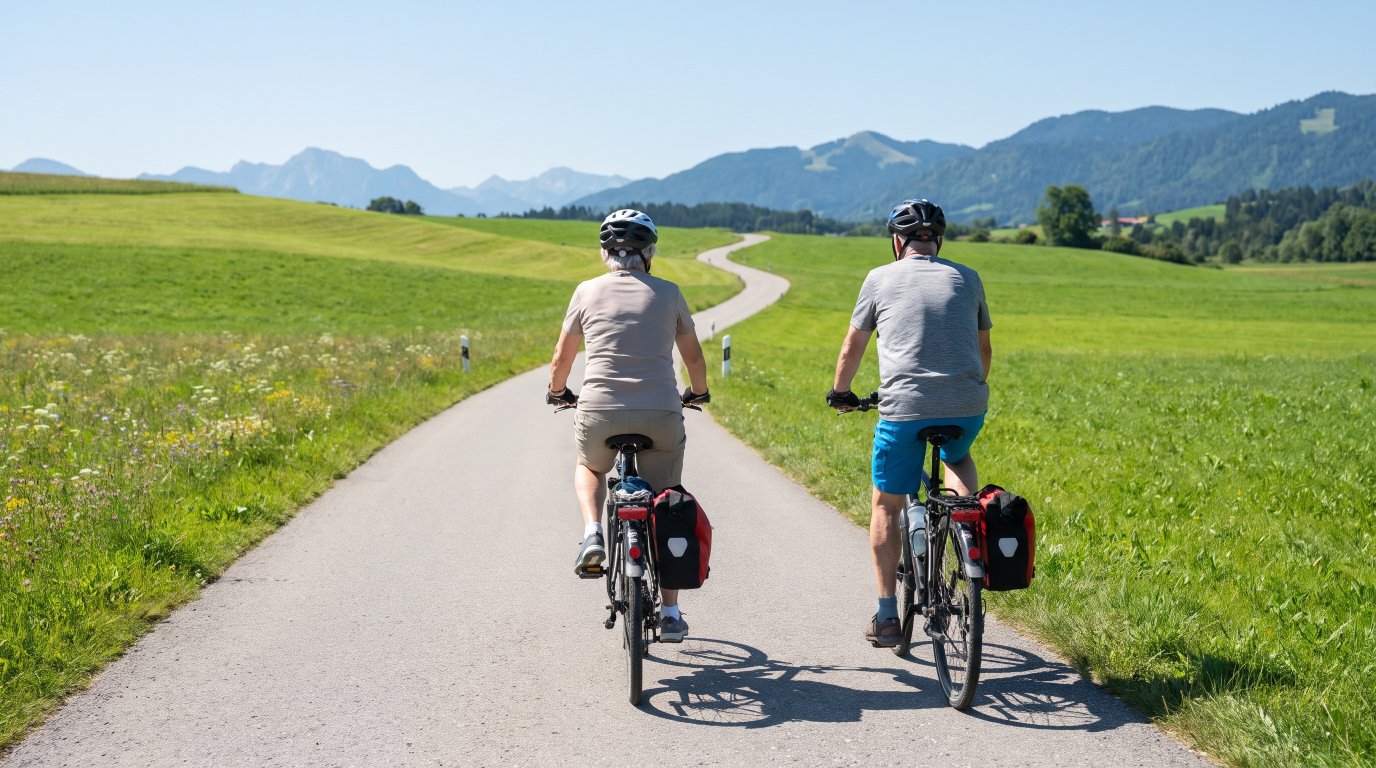
Cycling is considered the ideal sport for patients with a knee replacement. The cyclical movement without impact effectively trains the leg muscles and improves endurance without overloading the implant. Both riding outdoors and training on an exercise bike can be recommended without restriction. When riding off-road, however, heavy jolts from roots or stones should be avoided, which is why mountain biking is only suitable to a limited extent.
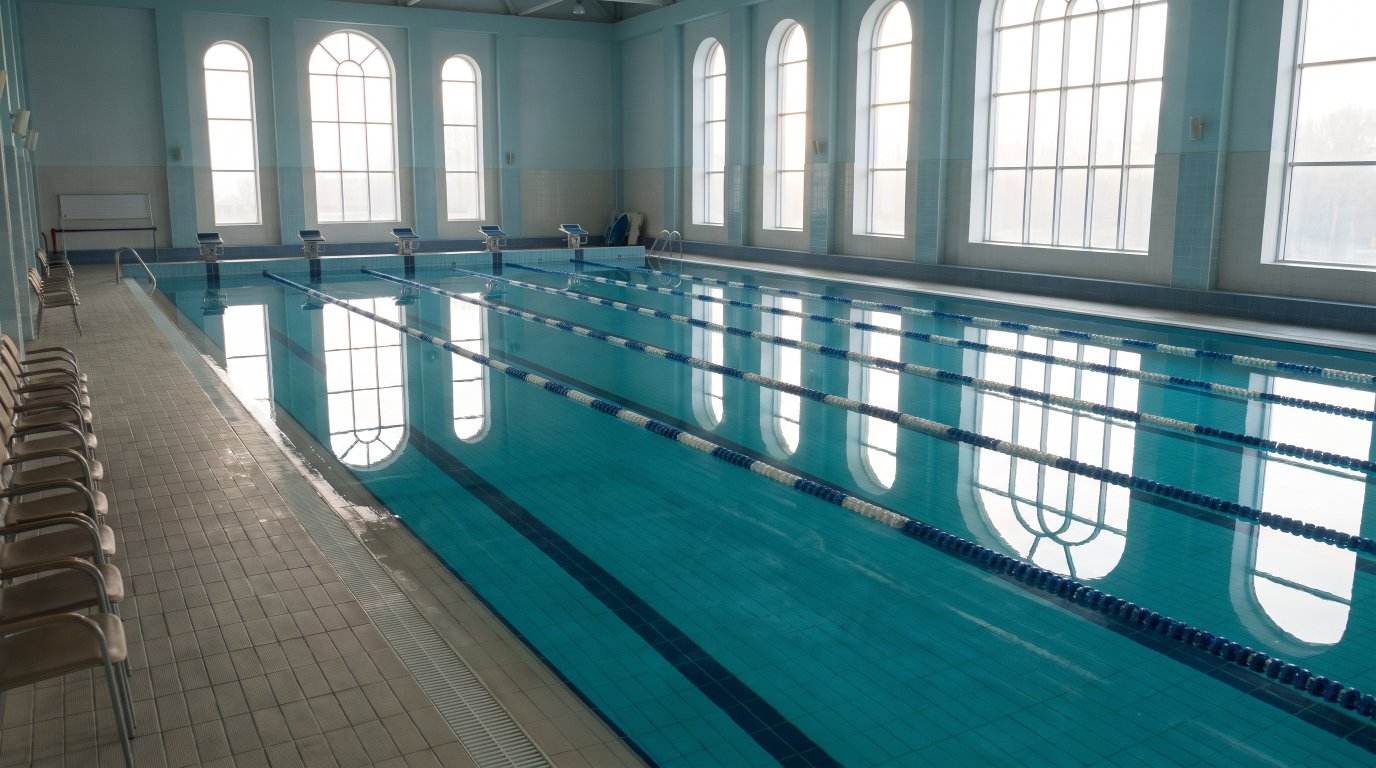
Swimming and aqua fitness benefit from the buoyancy of the water, which completely relieves the joints. Front crawl and backstroke are preferable to breaststroke, as the typical shearing and rotational movement of the breaststroke kick can put unfavourable strain on the knee joint. Aqua jogging and water aerobics offer additional options for joint-friendly training that strengthens the muscles and improves coordination at the same time.
Walking and Nordic walking are excellent for getting started with sporting activities after rehabilitation. The load is easy to dose, and using poles in Nordic walking relieves the knee joints even further. Hiking on flat to slightly hilly terrain is also possible, provided you wear suitable footwear and stick to stable paths.
Golf combines moderate physical activity with low joint stress and is therefore ideal for people with a knee replacement. The flowing swing movements put minimal strain on the knee while training coordination, balance and endurance. Dancing without jumps or acrobatic elements is also a wonderful way to combine the joy of movement with joint-friendly training.
Cross-country skiing is the textbook example of a low-impact winter sport. The gliding movements are ideal for the artificial joint while providing an intensive full-body workout. Unlike alpine skiing, the loads in cross-country skiing are even and predictable.
A closer look: skiing and winter sports
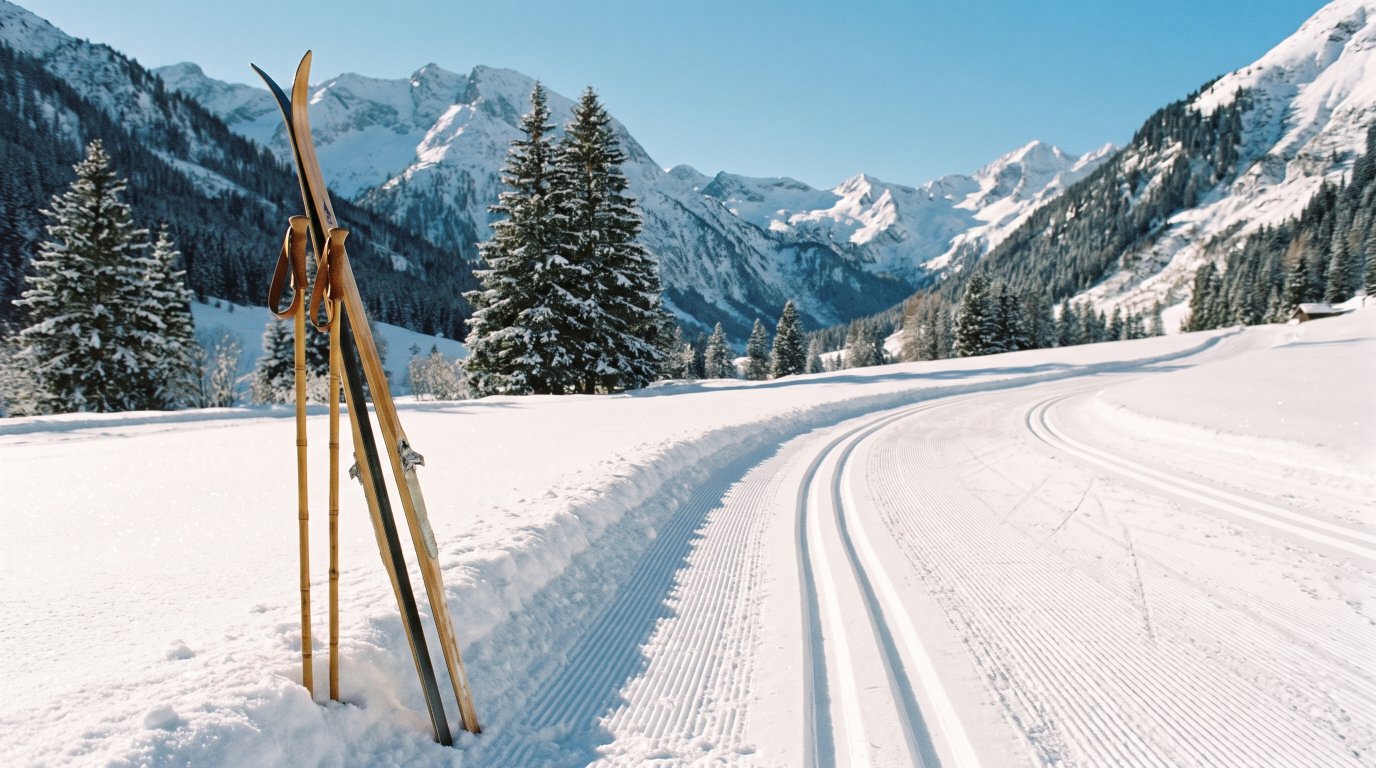
Skiing with a knee replacement is a key goal for many passionate winter sports enthusiasts after joint replacement and requires particularly differentiated advice. The decision depends on numerous factors: the chosen discipline, individual skiing technique, slope conditions and previous sporting experience. While cross-country skiing is recommended without restriction, assessing alpine skiing is considerably more complex.
In alpine downhill skiing, considerable forces act on the knee joint, especially on uneven slopes, at high speed or during abrupt braking. Experienced skiers with clean technique and well-trained muscles have the best prospects of a safe return to the slopes. What matters is a willingness to ski moderately and to forgo risky skiing. Mogul runs, deep snow and icy conditions should be avoided, as they can cause unpredictable load peaks.
Carving skis make skiing considerably easier and reduce the rotational forces on the knee joint. Modern ski technology can therefore help to make skiing with a prosthesis safer. The correct setting of the safety binding also deserves special attention in people with a knee replacement. In the event of a fall, the ski must release reliably to prevent extreme forces from being transmitted to the implant.
Safety recommendations for skiing
- Obtain medical clearance (usually no earlier than about 6 to 12 months after the operation)
- Complete targeted ski conditioning to build muscle before the season
- Ski moderately: avoid mogul runs, deep snow and icy conditions
- Adjust your speed and choose a defensive style
- Take regular breaks, as fatigue increases the risk of falling
- Use modern equipment with correctly adjusted safety bindings
For many skiers, realistic goal setting means giving up black runs and extreme carving in favour of a longer prosthesis lifespan. However, this adjustment of expectations is usually a small price to pay for being able to continue enjoying a much-loved winter sport.
Tennis and ball sports – individual assessment

Tennis is one of the sports that require differentiated advice, as it cannot be clearly classified as low- or high-impact. The load depends heavily on the intensity of play, the surface and individual technique. Clay courts are considerably gentler on the joints than hard or indoor courts, as they allow controlled sliding and thus reduce the impact forces during abrupt stops.
For experienced players with good technique, tennis may be possible again under certain conditions. The key is a moderate style of play without excessive competitive ambition. Doubles are preferred to singles, as the running distances are shorter and the load peaks lower. Limiting playing time to a maximum of one hour and avoiding intensive matches are further important requirements.
Warning signs after playing must be taken seriously: swelling, warmth or persistent pain in the knee area indicate overload and call for a reduction in intensity or a break from play. Your individual capacity for sport can change over time, which is why continuous self-monitoring is important.
Practical recommendations for ball sports
- Prefer softer playing surfaces (clay rather than hard court)
- Choose doubles instead of singles
- Limit playing time to a maximum of one hour
- Moderate intensity without a competitive character
- Pay attention to your body’s warning signs
Other ball sports with intensive body contact such as football, handball or basketball are generally not recommended. The unpredictable changes of direction, body contact and high load peaks clearly exceed the recommended limits for people with a knee replacement. These “stop-and-go” activities lead to mechanical loads that considerably increase the risk of loosening of the prosthesis.
Strength training and fitness – joint-friendly muscle building

Systematic strength training is a fundamental building block for patients with a knee replacement. Strong thigh and hip muscles stabilise the knee joint, relieve the implant and improve coordination, which lowers the risk of falls and increases safety in everyday life. The focus must be on joint-friendly muscle building that consistently avoids heavy weights and explosive movements.
Recommended fitness equipment for people with a knee replacement provides a controlled and safe training environment. The exercise bike is ideal for warming up and endurance training, as it allows a cyclical movement without impact. The cross-trainer simulates a natural running movement without the impact forces of real running and trains the whole body in a joint-friendly way. The rowing machine combines strength and endurance training with minimal stress on the knees.
In strength training, guided machines should be preferred to free weights, as they stabilise the movement and prevent uncontrolled loads. Leg press, leg extension and leg curl machines allow isolated training of the thigh muscles. It is important to start with low weights and to concentrate on clean, controlled execution of the movements.
Training by phases
- Warm-up (10–15 minutes): exercise bike or cross-trainer at low intensity
- Strength training (20–30 minutes): focus on thigh, gluteal and core muscles
- Endurance training (15–20 minutes): continue on joint-friendly equipment
- Stretching (10 minutes): relaxation and maintaining flexibility
Forms of training to avoid are plyometric exercises (jump training), extreme weight loads and exercises with abrupt changes of movement, as in CrossFit. These forms of training exceed the mechanical limits of a knee replacement and pose unnecessary risks to the implant.
Risks and precautions

The greatest risks of overloading a knee replacement through sport are loosening of the prosthesis and premature wear. Both complications can make a complex revision operation necessary, which is a considerably larger procedure than the initial implantation. Younger patients with a high level of activity more often need a revision, which is why handling the implant responsibly is of crucial importance.
Warning signs of overload must be recognised early and taken seriously. Persistent knee pain after sporting activity that does not subside within a few hours is a clear alarm signal. Swelling of the knee joint, noticeable warmth of the skin over the prosthesis and increasing restriction of movement require immediate medical assessment and, if necessary, a break from sport.
Preventive measures are the best protection against complications. Regular orthopaedic check-ups at the intervals recommended by your doctor allow early detection of signs of wear or incipient loosening. Consistently respecting load limits and avoiding high-impact sports without the relevant previous experience are further important protective measures.
Important prevention strategies
- Regular orthopaedic check-ups, with X-rays if necessary
- Immediate attention to your body’s warning signs
- Appropriate training intensity without excessive ambition
- No competitive sports with high load peaks
- Regular self-monitoring of knee function
Handling your prosthesis responsibly also means not “gritting your teeth” when you have symptoms, but taking a break in good time and seeking professional help. Your individual capacity for sport can change over the years, which is why your sporting activities may need to be adjusted continuously.
Orthopaedic Center Munich East
Your appointment at OZMO
Are you planning a knee replacement or would you like to become active again after joint replacement? Make an appointment for a consultation.

Frequently asked questions (FAQ)
Which sports can you do with a knee replacement?
After a knee replacement, joint-friendly low-impact sports are recommended above all. As a rule, the following are well suited: cycling (outdoors and on the exercise bike), swimming (preferably front crawl and backstroke), walking and Nordic walking, hiking on flat to slightly hilly terrain, cross-country skiing, golf, dancing without jumps and moderate strength training. These activities strengthen the muscles, promote endurance and improve coordination without excessively loading or wearing the implant.
Can you swim breaststroke with an artificial knee joint?
Breaststroke is only recommended with restrictions, as the typical shearing and rotational movement of the kick can place an unphysiological load on the artificial knee joint. Under certain circumstances, this movement can cause pain or irritation. Much better and safer alternatives are front crawl and backstroke, as these strokes load the knee joint in more natural planes of movement. Aqua jogging or water aerobics are also excellent options, as the buoyancy of the water completely relieves the joints while training the muscles effectively.
How much load can an artificial knee take?
With appropriate use, modern knee replacements achieve a lifespan of many years, often well over 15 years. However, their mechanical resilience is not unlimited – implants are not designed to permanently absorb the repeated, high impact forces of high-impact sports. Individual load capacity depends on factors such as body weight, muscle strength, bone quality and the precision of the original operation. Responsible handling and consistently avoiding overload are crucial for maximising the lifespan of the implant.
What should you no longer do with an artificial knee joint?
In general, all high-impact sports should be avoided, as they significantly increase the risk of loosening or increased wear of the prosthesis. In particular, you should avoid: football, handball, basketball and volleyball (stop-and-go movements with body contact), squash and badminton (rapid changes of direction), martial arts such as karate or judo (high load peaks), intensive jogging or running on hard surfaces such as asphalt, and high-level alpine skiing with mogul runs or racing. These activities are characterised by abrupt stops, rapid changes of direction, jumps and potential body contact.
Is running a marathon possible with an artificial knee joint?
Running a marathon with a knee replacement is strongly discouraged. The extreme and repetitive impact over 42.195 kilometres would load the implant far beyond its intended limits and drastically increase the risk of serious complications such as wear debris and loosening. While moderate jogging on soft ground may be discussed in individual cases for very fit and experienced runners with the relevant background, a marathon is an unrealistic and risky goal. Realistic goal setting focused on the long-term durability of the prosthesis is crucial for long-term success here.
Conclusion – individual advice as the key to success
Sports with a knee replacement – what is possible cannot be answered with a blanket response. Success depends crucially on the individual capacity for sport of each patient. Factors such as age, physical condition, previous sporting experience and personal goals must be carefully assessed in differentiated advice. Realistic goal setting is of central importance – it respects both the legitimate wishes of the patient and the biomechanical limits of modern prosthesis systems.
A safe return to sporting activities is achieved through a well-considered choice of suitable sports, systematic rehabilitation and regular medical check-ups. Low-impact sports such as cycling, swimming and walking offer excellent opportunities for an active life after joint replacement. They make it possible to maintain fitness and quality of life without excessively loading or endangering the implant.
As an orthopaedic center in the east of Munich, we support you on your way back to an active life. Our differentiated advice takes into account your individual circumstances and goals in order to develop a safe and realistic sports plan together with you. Because one thing is certain: with the right approach, a knee replacement does not mean the end of sporting activity, but the beginning of a new, pain-free chapter of your active life.
Make an appointment for a consultation to have your personal individual capacity for sport professionally assessed and to receive a tailor-made plan for your safe return to sport. You can find more background on the topic in our article on the training course “Sport after hip or knee endoprosthesis”.

Tailored diagnostics and treatment – at three locations in the east of Munich. For all insured and private patients.
Memberships & partners



Part of the Ortivity Network · Association doctors of the German Ice Hockey Federation
Clinic Munich
Haar
Münchener Straße 14
85540 Haar
+49 (0) 89 4141 434 – 64
Fax +49 (0) 89 45 45 49 – 39
Opening hours
| Morning | Afternoon | |
|---|---|---|
| Mon | 08:30 – 12:00 | 14:00 – 18:00 |
| Tue | 08:30 – 12:00 | – |
| Wed | 08:30 – 13:00 | – |
| Thu | 08:30 – 12:00 | 14:00 – 18:00 |
| Fri | 08:30 – 12:00 | – |
Appointments by arrangement only
Clinic Munich
Bogenhausen
Denninger Straße 15
81679 Munich
+49 (0) 89 4141 434 – 64
Fax +49 (0) 89 45 45 49 – 39
Opening hours
| Morning | Afternoon | |
|---|---|---|
| Mon | 08:30 – 12:00 | 14:00 – 18:00 |
| Tue | 08:30 – 12:00 | – |
| Wed | – | – |
| Thu | 08:30 – 12:00 | 14:00 – 18:00 |
| Fri | 08:00 – 12:00 | – |
Appointments by arrangement only
Clinic Munich
Feldkirchen
Sonnenstraße 26b
85622 Feldkirchen
+49 (0) 89 90 31 21 4
Fax +49 (0) 89 90 31 52 4
Opening hours
| Morning | Afternoon | |
|---|---|---|
| Mon | 08:00 – 12:00 | 14:00 – 17:00 |
| Tue | 08:00 – 12:00 | – |
| Wed | 08:00 – 12:00 | – |
| Thu | 08:00 – 12:00 | 14:00 – 17:00 |
| Fri | 08:00 – 12:00 | – |
Appointments by arrangement only